Instructions for Use (IFU)
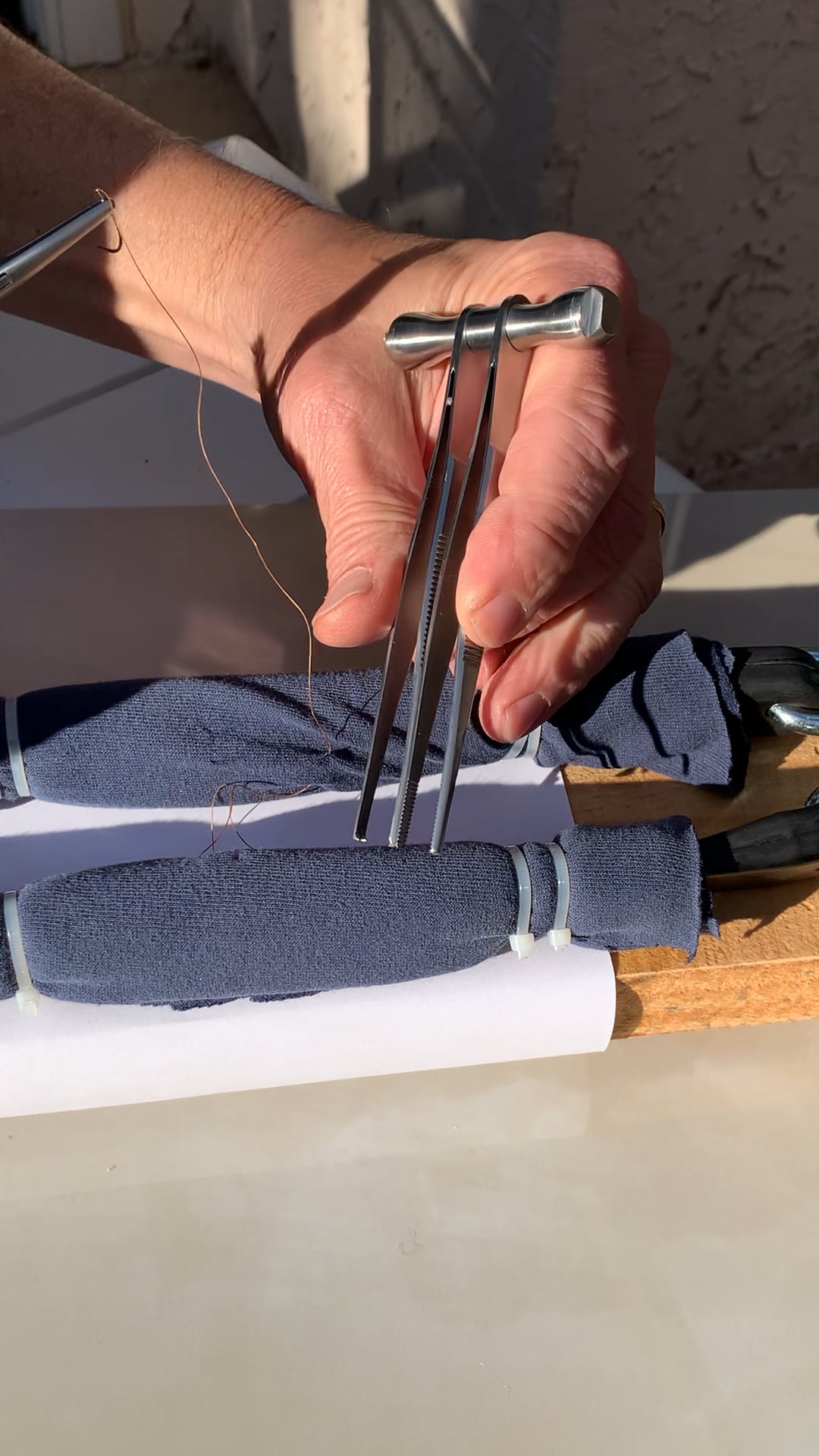
BICEPS: a Combination Forceps - Stainless Steel Handheld Surgical Instrument
Class I Medical Device
Manufacturer/Specification Developer: Joe Fiore Enterprises LLC
Patented Design - US Patent No. 11,771,418 B2
1. Device Description
The BICEPS is a combination forceps. It is a reusable, handheld stainless steel surgical instrument featuring toothed prongs (for tissue grasping and positioning) on one side, and non-toothed prongs on the other side (for needle or suture manipulation). It is designed for efficient single-tool use in surgical procedures without the need to switch instruments.
2. Intended Use/ Indications
The BICEPS is intended for use in surgical settings to grasp, hold, manipulate, and position tissue, organs, sutures, or needles during procedures. It is reusable and must be cleaned and sterilized before each use.
3. Contraindications
Do not use on patients with known hypersensitivity to stainless steel or its components. Not intended for single-use or as a replacement for specialized instruments where the design does not meet procedural requirements.
4. Warnings and Precautions
•The device is supplied NON-STERILE. It must be thoroughly cleaned, inspected, and sterilized before first use and after every subsequent use.
• Inspect for damage, corrosion, misalignment, or wear before each use. Do not use if
defective.
• Handle individually; avoid stacking or allowing contact with dissimilar metals during
processing to prevent corrosion or damage.
• Use only neutral pH (approximately 7) enzymatic detergents. Avoid harsh chemicals, bleach, or abrasive cleaners, as they can cause pitting, staining, or corrosion.
•Ensure proper lubrication after cleaning and before sterilization.
• Flash sterilization may reduce instrument lifespan and is not recommended for routine use.
5. Instructions for Cleaning and Decontamination (Point-of-Use and Manual/Automated)
Immediately after use (to prevent drying of residues):
1. Rinse under warm (not hot) running water to remove gross soil, blood, and debris.
2. Soak in a neutral pH enzymatic detergent solution (follow manufacturer instructions, typically 3-10 minutes). Fully submerge.
3. Manual Cleaning: Use a soft bristle brush or nylon brush to clean all surfaces. Rinse thoroughly with distilled or demineralized water.
4. Ultrasonic Cleaning (recommended): Place in a neutral pH solution. Cycle 5-15 minutes (per manufacturer guidelines). Rinse thoroughly.
5. Dry completely with lint-free cloth or air dry. Inspect for cleanliness and functionality.
6. Lubricate with instrument milk or approved surgical lubricant.
Automated washer-disinfectors may be used if validated and following device-compatible cycles. Change solutions frequently.
Disinfection (if needed prior to sterilization): Use EPA-approved solutions per manufacturer instructions (aldehyde-free preferred). Rinse thoroughly. Note: This does not achieve sterility.
6. Sterilization (Steam Autoclaving Only)
Steam sterilization (autoclaving) is the recommended method for stainless steel instruments. Recommended Cycles (wrapped instruments):
• Gravity Displacement: 121 °C (250°F) for 30 minutes, followed by 3 0-4 5 minutes drying.
• Pre-Vacuum (Prevac): 132°C (270°F) for 4 minutes, followed by 30 minutes drying.
(Alternative: 134°C / 273°F for 3 minutes where validated.)
•Wrap singly or insets using FDA-cleared sterilization pouches or wraps suitable for steam.
• Use biological and chemical indicators per facility protocols.
• Allow full drying cycle to prevent moisture-related corrosion.
• Do not exceed recommended temperatures or times. Avoid ETO, cold chemical, or plasma sterilization.
7. Inspection and Maintenance
•After sterilization and before use, visually inspect for: cleanliness, corrosion, pitting, cracks proper prong alignment/closure, smooth operation, and integrity of tips.
•Lubricate as needed.
•Store in a clean, dry, dust-free environment.
•Proper care extends service life. Damaged instruments must be discarded.
8. Storage and Handling
Store sterilized instruments in their sterile packaging in a cool, dry location until use.
9. Additional Information
• These instructions are based on standard practices for reusable stainless steel surgical instruments. Users should follow their facility's validated protocols and applicable standards (e.g., AAMI, AORN).
• Report any serious incidents to the manufacturer and relevant authorities.
• For questions, contact: joe@joefioreenterprises.com.
Version/Date: Revision: 1 / Date: July 2026
These Instructions for Use do not replace professional training.